Chowk, Lucknow
Chikankari arrived in Lucknow with the Mughal court and stayed with the city long after the court left. It has been embroidered almost entirely by women, at home, for four hundred years.
Cloth normally passes through three or four hands between the shop and the frame. Each hand takes a cut of a rate that was low to begin with, which is how an artisan doing forty days of murri work ends up earning less per day than a labourer on a building site.
We buy direct from 38 families. The rate is agreed before the frame is set up. It is paid per piece rather than per hour, so careful work isn’t punished. And it is paid on delivery of the panel, not on sale of the garment.
This is not charity. It is the only way to get the quality we want, because the best artisans have options and will not take rush work at a bad rate. The consequence for you is honest lead times: when we say eight weeks, that is eight weeks of one family’s work.
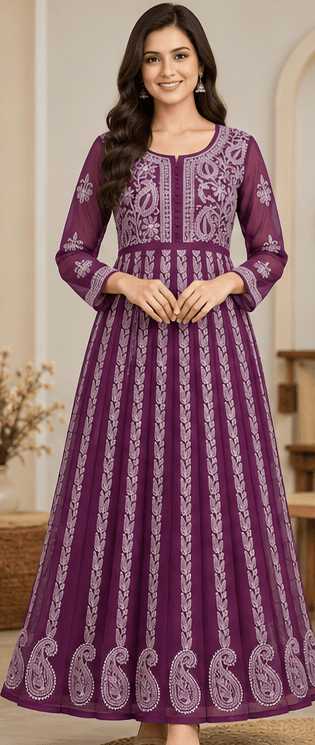
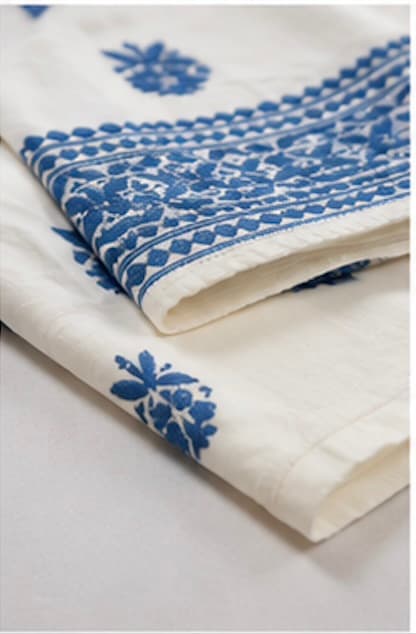
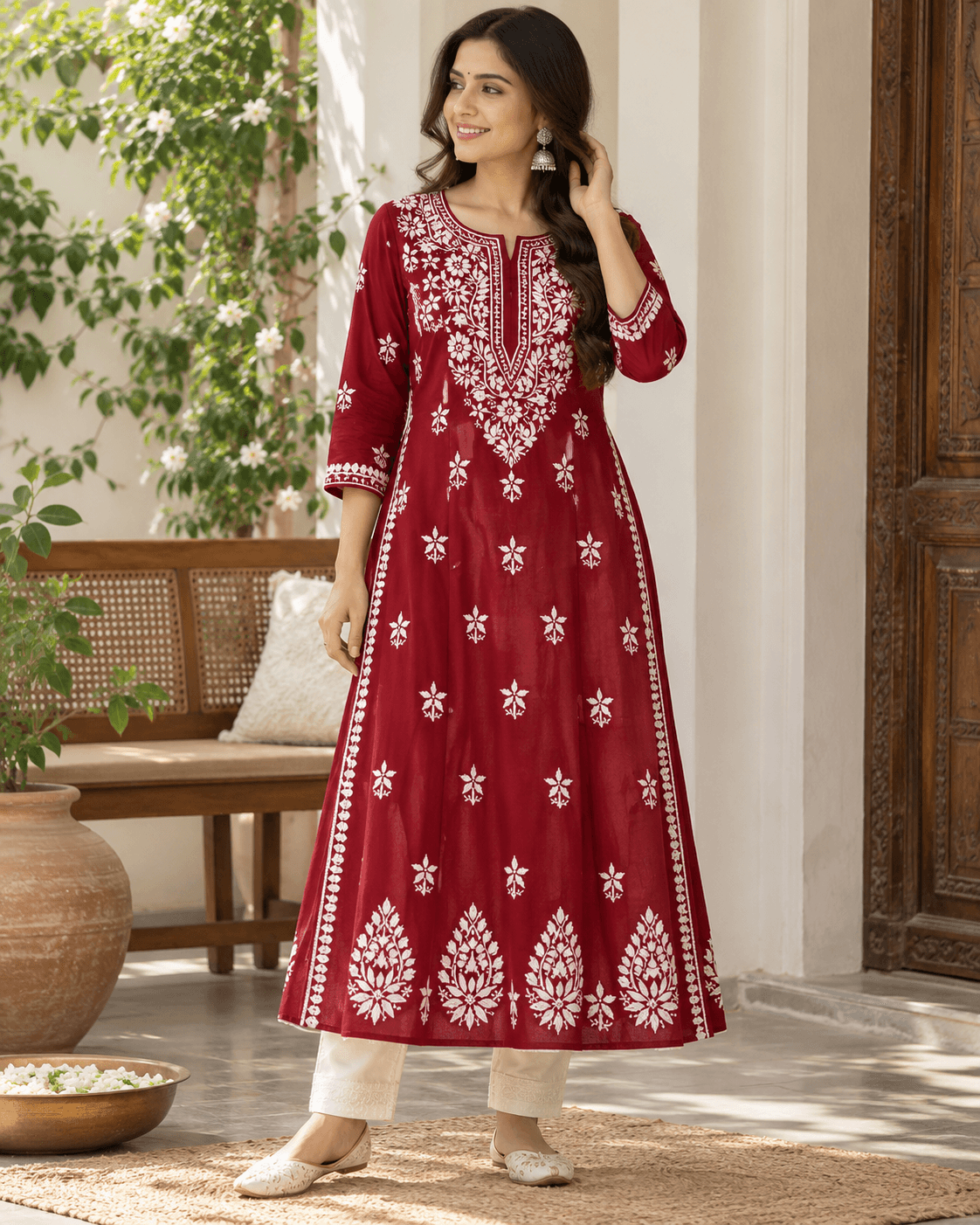
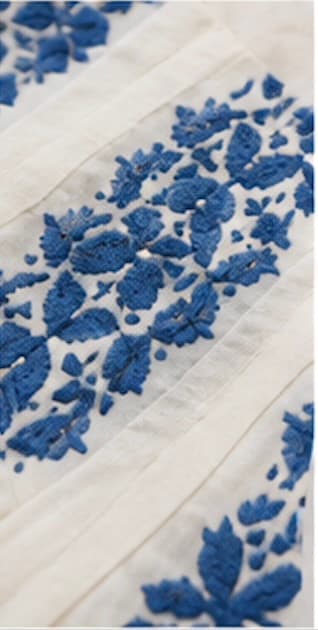
From cloth to garment
Every piece passes through the same four hands. Change the order and the garment fails.
Step one
The motif is printed onto the cut cloth in washable blue dye, using hand-carved wooden blocks. The print is a map, not a decoration — it disappears in the first wash.
Step two
The cloth goes out to homes across Chowk, Daliganj and Thakurganj. One family works one garment from start to finish, so the hand never changes mid-piece.
Step three
The washermen of the Gomti wash out the blue print and stiffen the cloth. Badly embroidered pieces fail here — the wash pulls loose knots out.
Step four
Seams, buttonholes and bias binding are done last, so the embroidery is never cut across. Then it is folded in muslin and boxed.
How to read a chikankari price tag
Coverage tells you very little. The named stitches tell you everything — a garment with four of them took someone a month.
Tepchiتیپچی
Running stitch
The outline. Worked on the right side, it defines every motif before any filling begins. Simple to learn, unforgiving to do well — one uneven length shows across the whole panel.
See pieces worked in TepchiWhat we guarantee
38
artisan families
We work directly with 38 families in Chowk and Daliganj. No middlemen, and the rate is agreed before the frame is set up.
100%
hand embroidered
Machine chikan exists and it is cheap. We do not sell it. Turn any piece inside out and you will see the knots.
6–11
weeks per luxury piece
A dense yoke can carry four thousand phanda knots. There is no version of that which takes a week.
100%
secure checkout
UPI, cards, netbanking and wallets through Razorpay. Your payment details never touch our servers.
It is the only test that matters. Turn any piece inside out and the knots will tell you who made it.
Shop the collection