The Craft · 5 min read · 30 November 2025
Reading a chikankari price tag
What you are actually paying for, stitch by stitch.
The Craft · 5 min read · 30 November 2025
What you are actually paying for, stitch by stitch.
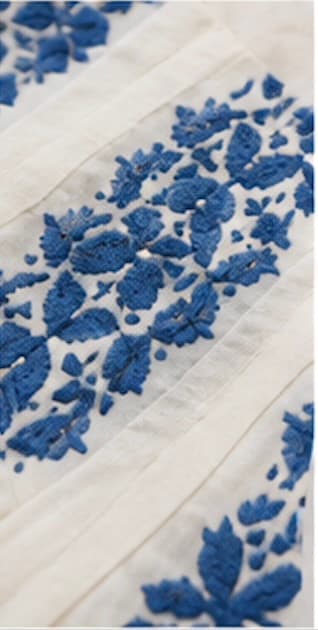
Two kurtas can look similar in a photograph and differ by a factor of eight in price. The difference is almost never the fabric.
Tepchi, the running stitch that outlines every motif, is the fastest work on the frame. A kurta outlined in tepchi alone might take five or six days. It is also the stitch machine chikan imitates most convincingly, which is why cheap pieces are almost always tepchi-only.
Phanda and murri are knots, tied one at a time. A densely worked yoke can carry four thousand of them. This is where days turn into weeks.
Bakhiya is worked from the reverse of the cloth, so the artisan is embroidering a motif she cannot see while she makes it. Jaali is slower still, and keel kangan borders are slow in a way that only shows if you look at a cuff closely.
So when you compare two pieces, count the stitches listed rather than looking at the coverage. A garment with four named stitches took someone a month. One with a single stitch took a week. Both can be worth buying — but only one of them is worth ₹16,000.
Written by Sughari Atelier. Questions are welcome.
Keep reading
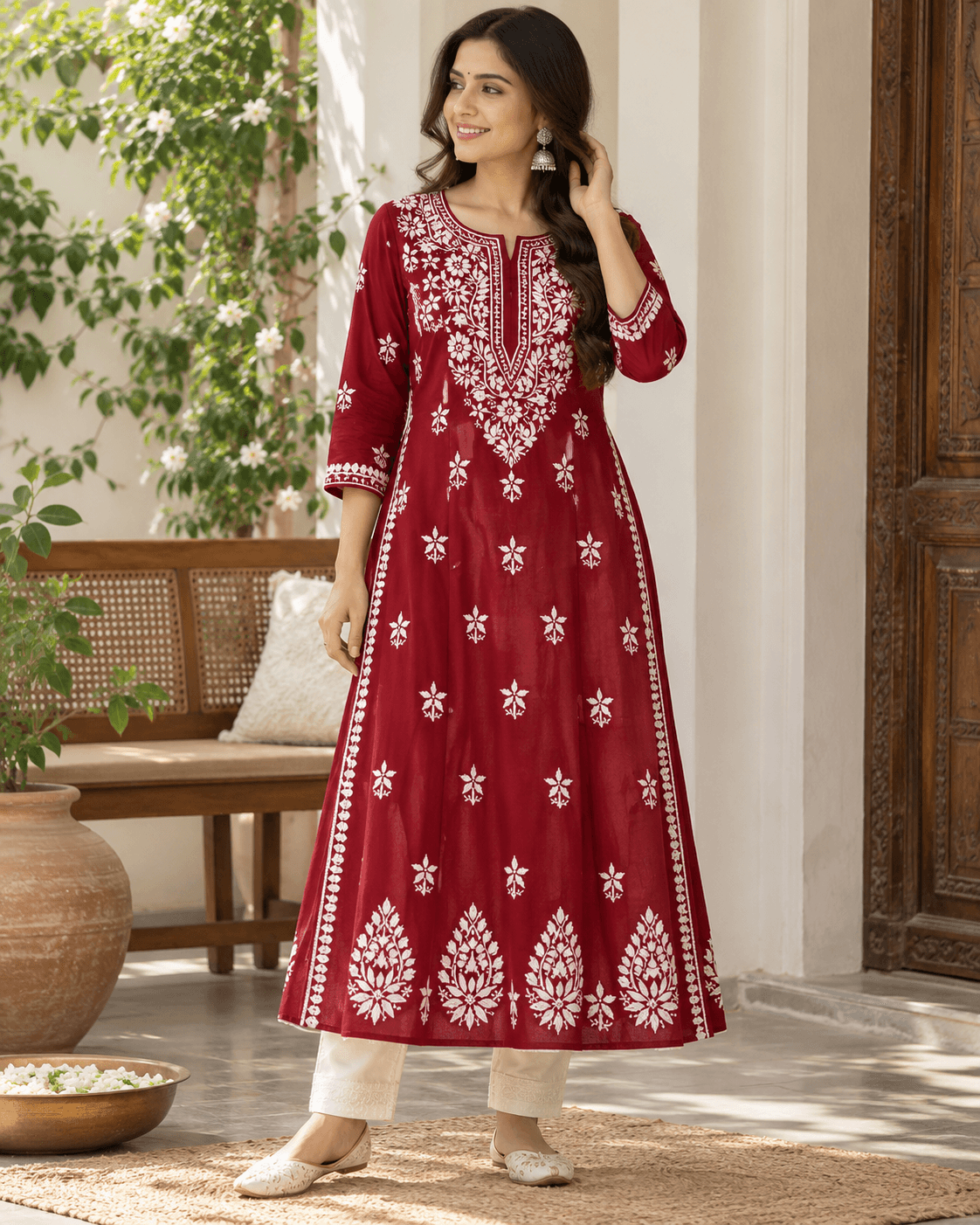
Everything that goes into a Chikankari suit set, and how to choose one for work, festivals and weddings.
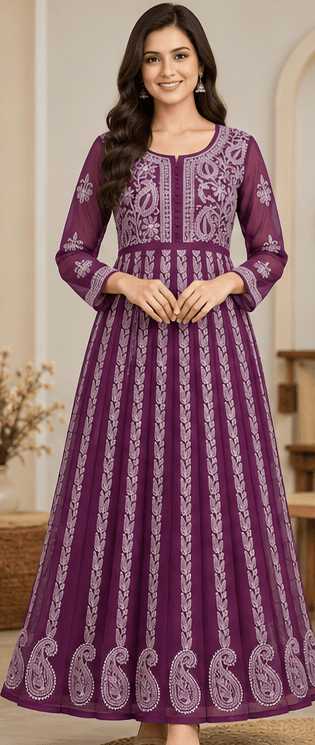
Why the flowing Anarkali is the most-loved festive silhouette in Chikankari — and how to choose yours.
From the collection
Mal cotton nayra cut with ghas patti work