The Craft · 6 min read · 4 February 2026
Why jaali is never cut
The single detail that separates real chikankari from everything that imitates it.
The Craft · 6 min read · 4 February 2026
The single detail that separates real chikankari from everything that imitates it.
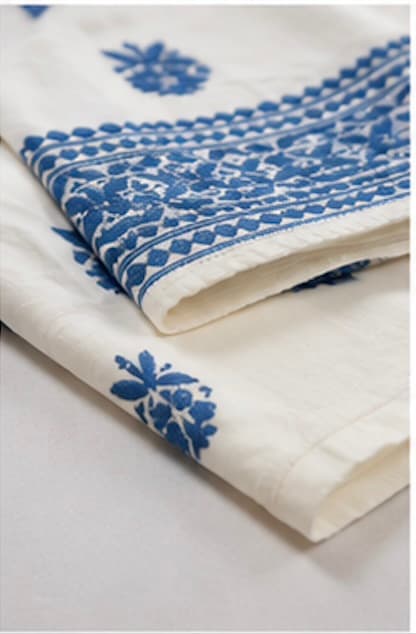
Hold a piece of chikankari jaali up to a window. If the light comes through in a clean grid and the edges of each hole look raw, the cloth has been cut. If the grid is slightly irregular and the threads at each opening are whole, it has been made the way it has been made in Lucknow for four hundred years.
Jaali is not cut-work. The artisan pushes the warp and weft of the cloth apart with the needle and holds them open with tension stitches at the corners. Nothing is removed. The fabric is exactly as strong after as before, which is why a jaali panel survives being washed for a decade while cut-work frays in a season.
It is also the reason jaali is priced the way it is. A single palm-sized panel takes a skilled artisan the better part of two days, and there is no shortcut — you cannot machine it, and an apprentice will tear the cloth. The families who do the finest jaali in Chowk can be counted on two hands.
When we first began commissioning, we asked for jaali on a cotton base to keep the price down. Every artisan we spoke to said the same thing: it will not hold. Cotton's weave is too tight to push open cleanly. Jaali wants muslin, mulmul or fine georgette, which is why every jaali piece we sell is in one of those three.
Written by Sughari Atelier. Questions are welcome.
Keep reading
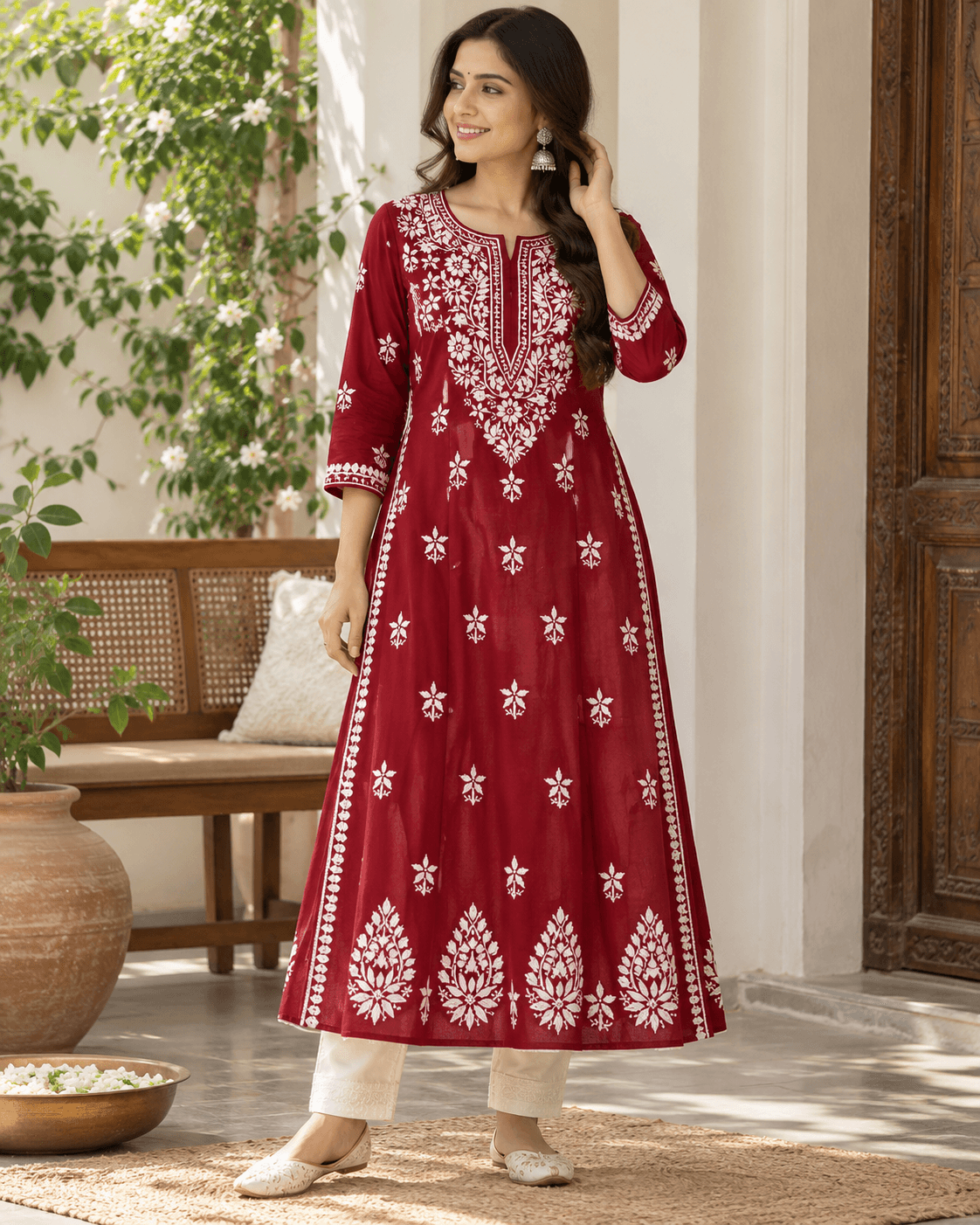
Everything that goes into a Chikankari suit set, and how to choose one for work, festivals and weddings.
Why the flowing Anarkali is the most-loved festive silhouette in Chikankari — and how to choose yours.
From the collection
Mal cotton nayra cut with ghas patti work